

How Geopolitics, Oil Prices, and Capacity Constraints Are Reshaping Supply Chains.
Over the past several weeks, global supply chains have entered a new phase of disruption—one driven not by a single event, but by a convergence of factors. Rising oil prices, ongoing tensions in the Middle East, disruptions in critical shipping lanes, and tightening trucking capacity are all happening at once.
For shippers, this isn’t just another headline cycle. It’s a structural shift that is already impacting costs, transit times, and overall supply chain reliability.
Let’s take a closer look at what’s happening—and what it means for your business.
Oil Prices Are Rising – And That Impacts Everything
Oil prices have climbed back toward $100 per barrel, driven largely by uncertainty surrounding the Iran conflict and instability in the Strait of Hormuz. While that may seem like a macroeconomic headline, the impact on logistics is immediate and far-reaching.
Fuel is a core input across every mode of transportation—whether it’s bunker fuel for ocean freight, jet fuel for air cargo, or diesel for trucking. As oil prices rise, carriers respond quickly through fuel surcharges and rate adjustments.
The result is a ripple effect across the entire supply chain, ultimately increasing landed costs for importers and exporters. Even small increases in fuel can compound quickly when applied across long transit distances and multiple legs of transportation.
The Straight of Hormuz: A Critical Chokepoint Under Pressure
At the center of this disruption is the Strait of Hormuz, one of the most important shipping lanes in the world. Roughly 20-30% of global oil supply passes through this narrow waterway, making it a critical artery for global trade.
Recent developments have significantly disrupted traffic in the region. Vessel movement has become inconsistent, and many carriers are avoiding the area altogether due to safety concerns and rising insurance risks. As a result, delays and congestion are building across affected routes.
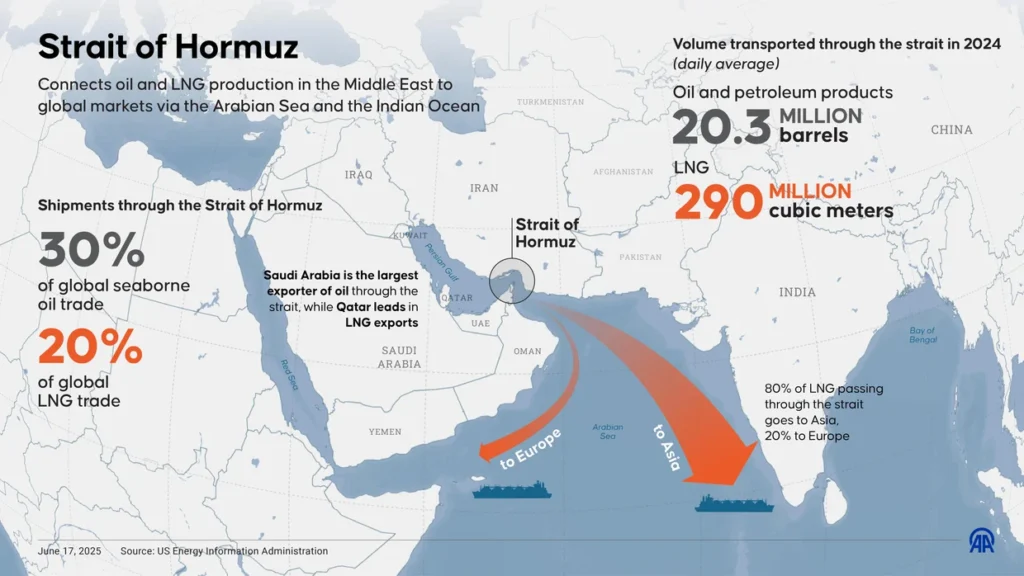
In some cases, vessels are rerouting around the Cape of Good Hope—a much longer journey that adds 10–14 days to transit times. This not only increases fuel consumption, but also drives up operating costs and reduces available capacity globally.
Even with ceasefire discussions in place, recovery is slow and uncertain. This is not a short-term issue—it’s one that could continue to impact global shipping patterns for some time.
Truck Capacity is Tightening – At the Worst Time
While international shipping faces disruption, the domestic side of the supply chain is also under pressure.
The U.S. trucking market has been undergoing a multi-year contraction. Since 2023, the industry has lost over 100,000 trucking jobs, driven by a mix of post-pandemic market correction, rising operating costs, and increased regulatory enforcement.
Now, an additional layer of pressure is emerging. New federal rules and enforcement actions targeting non-domiciled CDL holders and English language proficiency requirements are beginning to further reduce the available driver pool.
Recent policy changes have:
- Tightened eligibility for non-domiciled CDLs, significantly reducing the number of qualified drivers
- Introduced stricter verification and compliance requirements for carriers
- Increased enforcement of English proficiency standards, removing drivers from service during inspections
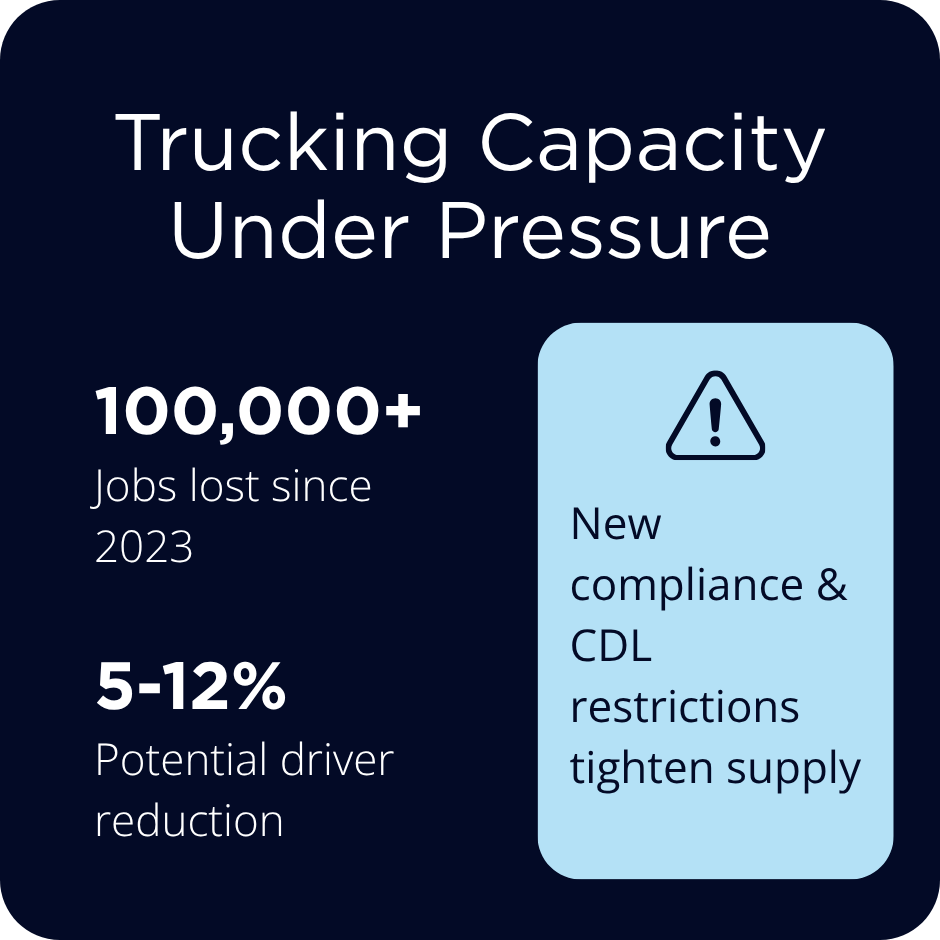
Industry estimates suggest these changes could remove 5%–12% of drivers from the market over time, further tightening capacity.
At the same time, diesel prices are climbing—further squeezing carrier margins and discouraging expansion. While rates are beginning to rise, many carriers remain cautious about adding capacity due to ongoing uncertainty around demand and costs.
The result is a tightening market with fewer trucks available—just as delays and disruptions are increasing the need for flexible, responsive transportation.
How It All Connects
What makes this moment particularly challenging is that these issues are not happening in isolation—they are compounding.
Geopolitical tensions are driving oil prices higher, which in turn increases transportation costs. Disruptions in key shipping lanes are causing delays and forcing reroutes, which ripple through the supply chain and create congestion. At the same time, regulatory changes and enforcement in the trucking industry are reducing available capacity domestically.
Together, these dynamics are creating a “perfect storm” for supply chains—one defined by rising costs, longer transit times, reduced flexibility, and increased volatility.
What This Means for Shippers
In this environment, supply chain management becomes less about reacting to individual issues and more about building resilience.
Shippers should expect continued rate pressure across all modes, along with tighter capacity—particularly for time-sensitive or high-volume shipments. Planning ahead is becoming increasingly important, as last-minute solutions may come with higher costs or limited availability.
There is also a growing need for accuracy and compliance. As enforcement increases—both at the border and within domestic transportation—having the right documentation, partners, and processes in place can make a meaningful difference in avoiding delays and additional costs.
How OpenRoad Helps You Navigate This Environment
At OpenRoad, we understand how frustrating these disruptions can be to your business. Our role is to help you navigate through it with confidence.
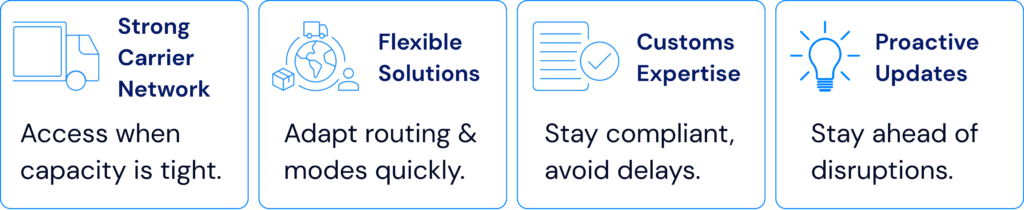
Even as capacity tightens, our strong, highly vetted carrier network allows us to secure space and keep your freight moving when others cannot. In a market where compliance requirements are increasing and capacity is being squeezed, having access to reliable, vetted carriers is more important than ever.
We also provide flexible transportation solutions across both domestic and international freight. As conditions shift, we help you adapt routing, timing, and mode to keep your supply chain moving efficiently.
As a licensed customs broker, we support you on the compliance side as well—ensuring your shipments move smoothly through customs, even as regulations evolve and enforcement increases.
Most importantly, we take a proactive approach. We stay ahead of market changes and keep you informed, so you can make better, more strategic decisions for your business.
Final Thoughts
The current market is complex—but it’s not unmanageable with the right partner.
Rising oil prices, geopolitical tensions, shipping disruptions, and tightening trucking capacity—including regulatory-driven reductions in driver availability—are creating real challenges across the global supply chain. But they also reinforce the importance of strong partnerships, flexible strategies, and experienced guidance.
At OpenRoad, we’re here to help you navigate the uncertainty—so your freight gets where it needs to go, no matter what the market brings.